
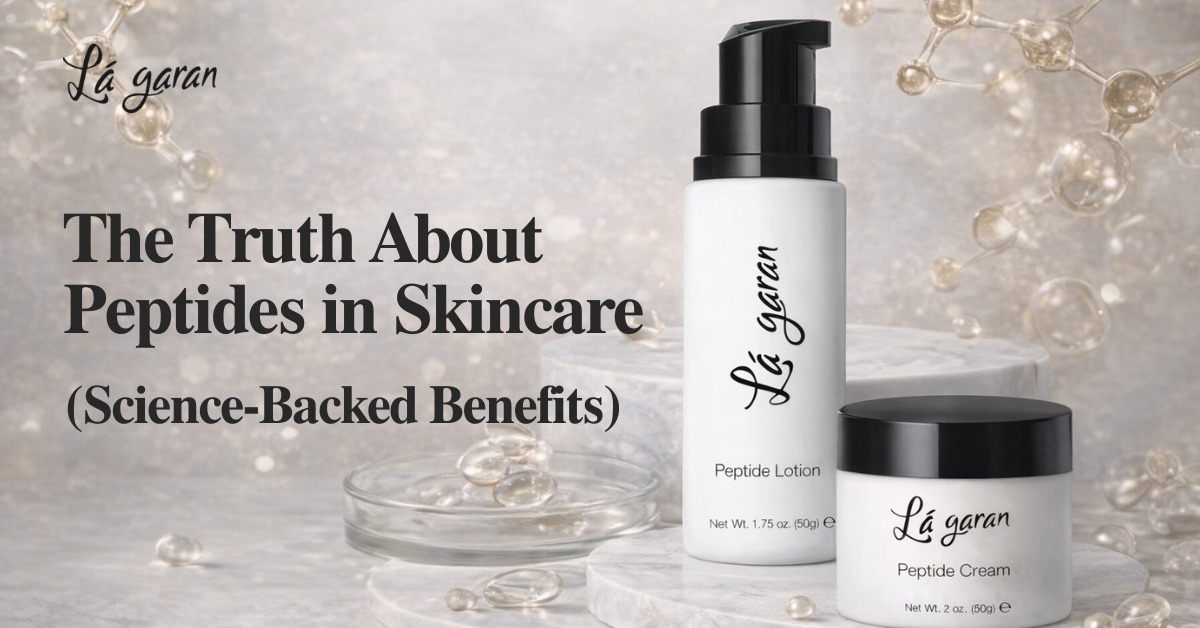
Walk into any skincare aisle and you’ll see the word “peptides” on every other bottle. But what does it actually mean? And does it work, or is it just clever marketing?
The answer is refreshingly clear: peptides are one of the few skincare ingredients with real, peer-reviewed science behind them. They’re not a trend. They’re a biological building block your skin already knows how to use. Understanding what they do and what they don’t can completely change how you build your skincare routine.
At the most basic level, peptides are short chains of amino acids. Amino acids are the building blocks of proteins, and proteins are what your skin is largely made of collagen, elastin, and keratin chief among them.
Think of peptides as messengers. When applied to skin, they send signals to your cells, telling them to perform specific functions: produce more collagen, repair damage, retain moisture, or calm inflammation. Your skin speaks this language naturally. Peptides are simply a way of continuing that conversation as you age.
There are thousands of peptides, but the ones used in skincare fall into a few key categories each with a distinct job to do.
Collagen Production: This is the big one. Collagen keeps skin firm and plump, but production drops significantly after your mid-20s. Signal peptides like palmitoyl pentapeptide-4 (Matrixyl) have been shown in clinical studies to stimulate fibroblasts, the cells responsible for producing collagen. The result over time is visibly firmer, smoother skin.
Reduction of Fine Lines and Wrinkles: Because peptides support collagen and elastin synthesis, consistent use leads to measurable improvements in skin texture and the depth of fine lines. Studies on Argireline (acetyl hexapeptide-3) show it can reduce the appearance of expression lines by relaxing facial muscle contractions, a gentler alternative to more invasive treatments.
Improved Skin Barrier Function: Barrier peptides, like those derived from ceramide precursors, strengthen the skin’s outer protective layer. A healthy barrier means less water loss, less sensitivity, and better resistance to environmental stressors.
Hydration: Certain peptides particularly those that work alongside hyaluronic acid enhance the skin’s ability to attract and retain moisture. This makes them especially effective in serums and moisturizers designed for dry or dehydrated skin.
Wound Healing and Repair: Copper peptides (GHK-Cu) have been studied extensively for their ability to support tissue repair, reduce inflammation, and even promote hair follicle health. They’re some of the most researched peptides in dermatology.
Not all peptides are created equal. Here’s how the main categories break down:
Signal Peptides tell your skin to produce more collagen and elastin. Best for anti-aging and firming. Examples include Matrixyl and its variants.
Carrier Peptides deliver trace minerals like copper to the skin, supporting healing and enzyme activity. GHK-Cu is the gold standard here.
Neurotransmitter-Inhibiting Peptides work similarly to Botox by relaxing facial muscles to soften expression lines. Argireline falls into this group.
Enzyme-Inhibiting Peptides slow down the breakdown of collagen by blocking the enzymes responsible for it. They help preserve what you already have.
Knowing which type is in your product helps you set the right expectations and choose the right formula for your specific concerns.
Peptides are most effective in leave-on products like serums, moisturizers, and eye creams. Cleansers and toners don’t provide enough contact time for peptides to penetrate properly.
Layering matters too. Apply peptide serums after cleansing and toning, before heavier moisturizers. They pair well with hyaluronic acid, niacinamide, and antioxidants like vitamin C. However, use caution when combining with strong acids (AHAs, BHAs) highly acidic environments can break down peptide bonds before they reach the skin.
Consistency is everything. Peptides are not overnight miracles. Most clinical studies show meaningful results after 8 to 12 weeks of daily use. Patience pays off.
It’s worth being honest here. Peptides are powerful but they’re not magic. They won’t reverse deep wrinkles overnight, replace the results of professional treatments, or work well in poorly formulated products where they’re listed last on the ingredient label.
The concentration and formulation matter enormously. A product with a trace amount of peptides won’t deliver the same results as one where they’re a core active ingredient. Always check where peptides appear in the ingredient list.
Are peptides safe for all skin types?
Yes. Peptides are generally well-tolerated by all skin types, including sensitive skin. They’re non-irritating and free of the side effects associated with retinoids or strong acids.
Can I use peptides with retinol?
You can, but apply them at different times peptides in the morning, retinol at night to get the most from each without potential degradation.
How long does it take to see results from peptides?
Give it at least 8 weeks of consistent daily use before evaluating results. Skin cell turnover takes time.
Are expensive peptide products worth it?
Price doesn’t always equal efficacy. What matters is peptide concentration, formulation stability, and whether the product is stored correctly (avoid clear bottles exposed to light).
Do peptides replace collagen supplements?
They work differently. Topical peptides signal your skin cells to produce collagen from the outside. Collagen supplements work from the inside. Using both together may offer complementary benefits.
Can peptides help with acne-prone skin?
Some peptides, particularly antimicrobial peptides, show promise in reducing acne-causing bacteria and calming inflammation. They’re a gentler addition to acne-focused routines.
Are natural peptides better than synthetic ones?
Not necessarily. Synthetic peptides are often more stable, better studied, and more precisely formulated than naturally derived versions. Science, not origin, should guide your choice.
Peptides aren’t hype. They’re one of the most well-researched, versatile, and skin-compatible ingredients available in modern skincare. From stimulating collagen to strengthening your barrier and smoothing fine lines, the evidence is there and it’s solid.
The key is choosing the right type for your concern, using it consistently in a well-formulated product, and giving it the time it needs to work. Add peptides to your routine, stay consistent, and let the science do its job.
Your skin already knows how to respond. Give it the right signal.